Buscar en el blog (Search in the blog)

2024/03/04

ENG-SPA: Fish in danger of extinction due to rising temperatures? (¿Peces en Peligro de Extinción debido al aumento de temperatura?)


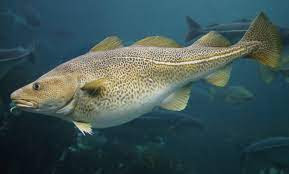
Atlantic Cod

English version

A recent study by the German Center for Integrative Biodiversity Research (iDiv) Halle-Jena-Leipzig has discovered that the increase in global temperature affects fish in a very negative way. 

The researchers analysed ten years of data about the stomach contents of six commercially important fish species with different feeding strategies in the Bay of Kiel. For example, flatfish, like the European flounder (Platichthys flesus), tend to be sit-and-wait predators, whereas Atlantic Cod (Gadus morhua) are more actively foraging feeders.

Due to rising temperatures caused by Climate Change, fish are feeding on large numbers of small prey to meet their immediate energy needs. This happens, among other reasons, due to over exploitation of fisheries, which makes large prey that provide more energy become scarce and fish have to feed on a large amount of small available preys, which allows them to satisfy their daily energy needs but not their medium or long-term needs. 

The effects of these changes in feeding have been analyzed with mathematical models and the results indicate these new foraging behaviors could accelerate the extinction of many fish species.

Platichthys flesus

Spanish version

Un estudio reciente del Centro Alemán para la Investigación Integrativa de la Biodiversidad (iDiv) Halle-Jena-Leipzig ha descubierto que el aumento de la temperatura global afecta a los peces de forma muy negativa.

Los investigadores analizaron diez años de datos sobre el contenido estomacal de seis especies de peces comercialmente importantes con diferentes estrategias de alimentación en la Bahía de Kiel. Por ejemplo, los peces planos, como la platija europea (Platichthys flesus), tienden a ser depredadores que se quedan quietos y esperan a sus presas, mientras que el bacalao del Atlántico (Gadus morhua) se alimenta más activamente.

Debido al aumento de las temperaturas provocado por el cambio climático, los peces se alimentan de una gran cantidad de presas pequeñas para satisfacer sus necesidades energéticas inmediatas. Esto sucede, entre otras razones, por la sobreexplotación de las pesquerías, que hace que las presas grandes que les proveen de mayor cantidad de energía escaseen y los peces tengan que alimentarse de una gran cantidad de presas pequeñas disponibles, lo que les permite satisfacer sus necesidades energéticas diarias pero no sus necesidades a mediano y largo plazo.

Los efectos de estos cambios en la alimentación se han analizado con modelos matemáticos y los resultados indican que estos nuevos comportamientos de alimentación podrían acelerar la extinción de muchas especies de peces.

Source: Fuente: sciencedaily.com

2024/02/26

Chile: More than 100 new species found in underwater mountains


A squat lobster documented in coral at a depth of 669 meters on Seamount JF2.

Some 3000 meters underwater off the coast of Chile, striking purple, green, and orange sponges burst from the rocks. Sea urchins with maroon spines gather in colonies, while poppy-colored crustaceans pick their way among them. Transparent, ghostly creatures undulate in the dark. A team of researchers captured these and dozens of other never-before-seen species—more than 100 in total—with a camera mounted to a deep-sea robot traversing largely explored underwater mountains, known as seamounts, with steep cliffs that rise from the sea floor.

A spiraling coral documented at 1419 meters deep on Seamount JF1

Researchers from the Schmidt Ocean Institute recorded footage up to 4500 meters deep near the Nazca and Salas y Gómez ridges, which together stretch more than 3000 kilometers. Along with the variety of new organisms—including sponges, amphipods, urchins, crustaceans, and corals—the team mapped four seamounts in Chilean waters that were previously unknown to scientists, they report today in a press release. The tallest of these measured 3530 meters from sea floor to peak and was unofficially named Solito by the researchers.

VIDEOS:

2024/01/27

ENG/ESP: Top 10: Life´s greatest inventions- Los 10 Mayores Inventos de la Naturaleza

English Article:


1. The eye
THEY appeared in an evolutionary blink and changed the rules of life forever. Before eyes, life was gentler and tamer, dominated by sluggish soft-bodied worms lolling around in the sea. The invention of the eye ushered in a more brutal and competitive world. Vision made it possible for animals to become active hunters, and sparked an evolutionary arms race that transformed the planet. The first eyes appeared about 543 million years ago - the very beginning of the Cambrian period - in a group of trilobites called the Redlichia. Their eyes were compound, similar to those of modern insects, and probably evolved from light-sensitive pits.

Trilobites' eyes allowed them to become the first active predators, able to seek out and chase down food like no animal before them. And, unsurprisingly, their prey counter-evolved. Just a few million years later, eyes were commonplace and animals were more active, bristling with defensive armour. This burst of evolutionary innovation is what we now know as the Cambrian explosion. However, sight is not universal. Of 37 phyla of multicellular animals, only six have evolved it, so it might not look like such a great invention after all - until you stop to think. The six phyla that have vision (including our own, chordates, plus arthropods and molluscs) are the most abundant, widespread and successful animals on the planet.
Graham Lawton.

2. The brain
The evolution of brains lifted life beyond vegetation. Brains provided, for the first time, a way for organisms to deal with environmental change on a timescale shorter than generations. A nervous system allows two extremely useful things to happen: movement and memory. If  you have a nervous system that can control muscles, then you can actually move around and seek out food, sex and shelter. The simplest nervous systems are just ring-like circuits in cnidarians - the jellyfish, urchins and anemones. The next evolutionary step, which probably happened in flatworms in the Cambrian, was to add some sort of control system to give the movements more purpose. Armed with this, finding food would have been the top priority the earliest water-dwelling creatures. With brains come senses, to detect whether the world is good or bad, and a memory. Together, these let the animal monitor in real time whether things are getting better or worse. The more complex functions of the human brain - social interaction, decision-making and empathy, for example - seem to have evolved from these basic systems controlling food intake. The sensations that control what we decide to eat became the intuitive decisions we call gut instincts. The most highly developed parts of the human frontal cortex that deal with decisions and social interactions are right next to the parts that control taste and smell and movements of the mouth, tongue and gut. There is a reason we kiss potential mates - it's the most primitive way we know to check something out.
Helen Phillips.

Meet the 100 Weirdest and Most endangered Birds

The comic dodo, the stately great auk, the passenger pigeon blotting out the skies, the giant moas reigning over New Zealand: humankind has wiped out nearly 200 species of birds in the last five hundred years. Birds we'll never get back. Now, if we don't act soon we'll add many new ones to the list: birds such as the giant ibis, the plains-wanderer, and the crow honey-eater. These are just a few of the birds that appear on the long-awaited EDGE list of the world's 100 strangest and most endangered birds. 

Below are just a tiny sample of 10 of those weird and endangered bird species:

 1


Spoon-billed sandpiper chick. The spoon-billed sandpiper is number 11 on the list having been decimated by hunting and coastal development. Less than 200 pairs survive today. 
Photo by: Simon Buckell. 

2.
This Brilliant hummingbird is found on a single island in the Juan Fernandez Archipelago. Photo by: Peter Hodum.

ENG/ESP: Bizarre Marine Criatures - Criaturas Marinas Extrañas

  • Las profundidades marinas apenas se conocen, y las nuevas especies que se descubren no dejan de sorprendernos. Les dejo una pequeña muestra de las especies marinas más extrañas encontradas hasta la fecha. Ellas son:
  • The deep sea is poorly known, and we not cease to surprise as new species are discovered. Below you can take a glance to  a small sample of bizarre marine species discovered.

1) Pez Ojos de Barril (en inglés: barreleye; Macropinna microstoma) del Océano Pacífico luce sus barriles de color verde altamente sensibles dentro de su cabeza transparente. es la única especie de pez del género Macropinna, perteneciente a la familia Opisthoproctidae. Miden unos 15 centímetros y es reconocible por su cabeza transparente en oposición a la opacidad del resto del cuerpo. Se encuentran entre los 600 y 800 metros de profundidad. Encima de su boca tiene dos orificios negros que por su posición pueden parecer los ojos, en cambio son sus órganos olfativos. El pez ve a través de su cráneo transparente por medio de los órganos verdes que están dentro de dicho cráneo con una visión periférica grandísima pudiéndolos mover en todas las direcciones. Son unos ojos tubulares, muy sensibles a la luz. Este hecho le permite tener un campo de visión muy amplio. Este ejemplar, descubierto vivo en 2004 en las aguas profundas frente a la costa central de California por el Instituto de Investigación de la Bahía de Monterey (siglas en inglés: MBARI), es el primer espécimen vivo de este tipo que se ecuentra con su cabeza transparente intacta. , ya se sabía de su existencia  desde 1939, sólo a partir de muestras destrozadas arrastradas a la superficie por las redes.  
Fuentes (2): 1) nationalgeographic.com
2) wikipedia (español)

1) Barreleye (Macropinna microstoma) from the Pacific Ocean, showing off its highly sensitive green barrels within its clear head. It actually is the only fish species of the genus Macropinna, belonging to the family barreleyes. They measure about 15 centimeters and is recognizable by its transparent head as opposed to the opacity of the body. They are between 600 and 800 meters deep.
Over his mouth has two black holes that resemble eyes position may seem, however are their olfactory organs. The fish sees through her skull through the transparent green bodies that are within the skull with a great peripheral vision and that can be moved in all directions. Tubular eyes are very sensitive to light. This allows it to have a very wide field of view.
This specimen, discovered in 2004 living in the deep waters off the central California coast by the Research Institute Monterey Bay (MBARI), is the first live specimen of its kind with its head transparent intact. Already knew of its existence since 1939, only from broken  samples pulled to the surface by the networks.
Fonts (2): 1) nationalgeographic.com
2) wikipedia (Spanish)

Choosing a Puppy according to his/her Energy level


If you already have made the decision to adopt or buy a dog, here below you will find three (3) lists with the breeds categorized by their levels of energy. However, keep in mind that although the breed is important, is also important to interact with those puppies you are interested in to check their behavior before taking them home.

A dog’s energy level is the single most important factor to consider when choosing a dog, says celebrity dog trainer and YouTube star Zak George. 

Here’s how to evaluate a low-energy dog, a medium-energy dog, and a high-energy dog.

Figuring out a dog’s energy level is the easiest way to categorize whether or not a dog is right for you. Of course, there are other factors you might think about such as size, puppy versus an adult, and a mixed breed versus a purebred. However, energy is certainly the most important one.

So, how do you choose a dog based on energy level? We’ll outline the different levels so you can figure out where a dog fits. However, keep in mind that when first meeting many dogs, their energy is likely to be very high due to the excitement of greeting someone new. Make sure you ask the breeder or shelter worker what the energy level of the prospective dog is like during his down time. Also, try to visit the dog multiple times to get a more complete sense of what his personality is like.

Low-Energy Dogs: Level One

Because these dogs lie around most of the time, they make a great companion for a relatively inactive person. These couch potatoes require a few short daily walks, and then they’re happy snuggling next to you for the rest of the day. Low-energy dogs are not typically motivated to learn very advanced tasks, nor are they likely to be impressive athletes. However, they’ll likely make up for it in good behavior, and you won’t have to put in as much effort to train them as you would need to for a higher-energy dog.

How to spot a low-energy dog: Untrained low-energy dogs may wag their tails and come up to you, but they’re usually not the type to incessantly jump. Look for the dog who interacts with people and other dogs but does not engage in sustained, vigorous play. When considering a dog who seems to be low energy, first make sure that you rule out sickness or a recent change in the dog’s environment as the cause of his calmness. That way when you get home you won’t be in for any surprises, like finding out that the dog is actually a little Energizer bunny!

Low energy dog breeds:

In terms of gentler, less active breeds, choose from some of the following (mixed) breeds.

·         Basset Hound

·         Bloodhound

·         Bolognese

·         Bulldog

·         Cavalier King Charles Spaniel

2024/01/16

Histórico de Ataques de Lobos a personas en España


  En España hay casos documentados (nombre y apellidos, fecha y lugar) de personas depredadas (muertas y comidas) por lobos. Estos lamentables sucesos son la excepción, no la norma. Resulta muy curioso que la fértil bibliografía lobuna española nunca mencione estas predaciones sobre humanos. Solo en Valverde y en cierto artículo de BIOLÓGICA encontramos mención expresa a ello.

Por supuesto, la casuística existente en la realidad es muy amplia : al lobo le han echado la culpa de ataques cometidos por perros; de muerte de reses que en realidad han sido muertas por un pastor necesitado de cambiar su monótona dieta; e incluso de asesinatos y homicidios que en realidad fueron cometidos por personas. En este último apartado resulta paradigmático el caso de Manuel Blanco Romasanta, individuo marginal que vivió en el S. XIX. Llamado "el hombre-lobo de Allariz" (Ourense), afirmaba transmutarse en lobo, lo cual no era sino una mala excusa para intentar zafarse de las consecuencias penales de sus crímenes, cometidos con la finalidad última de robar y convertir la grasa de sus víctimas humanas en jabón, que luego vendía. Condenado a morir en el garrote vil, fue indultado y pasó el resto de sus días en un centro psiquiátrico.

Desde aquí hasta el final de este apartado, seguimos fielmente al citado Valverde.

En principio son 3 las situaciones en las que el lobo ibérico puede suponer un peligro cierto para la integridad e incluso la vida de las personas : 
1) Ejemplar afectado de rabia (o acosado o herido, añadimos aquí). 

2) Hembra en el destete de sus lobeznos (Junio/Julio), cuando agotada por la lactancia, y tras ser alimentada por el macho, necesita volver a cazar para sí misma y sus retoños. 

2024/01/07

ENG/SPA Origin of Komodo Dragon Revealed Orígen del Dragón de Komodo)


 WOW!!! Look at this huge Komodo Dragon!!!

English Article:  
A study has found that the world’s largest living lizard species, the Komodo dragon, most likely evolved in Australia and dispersed westward to its current home in Indonesia.

In the past, researchers had suggested the Komodo dragon (Varanus komodoensis) developed from a smaller ancestor isolated on the Indonesian islands, evolving its large size as a response to lack of competition from other predators or as a specialist hunter of pygmy elephants known as Stegodon. However, over the past three years, an international team of scientists unearthed numerous fossils from eastern Australia dated from 300,000 years ago to roughly 4 million years ago that they now know belong to the Komodo dragon. 
Picture of Megalania
For the last 4 million years, Australia has been home to the world's largest lizards, including the 16-foot-long giant (5 meters) called Megalania, once the world's largest terrestrial lizard but which died out some 40,000 years ago.

The researchers said the ancestor of the Komodo dragon most likely evolved in Australia and spread westward, reaching the Indonesian island of Flores by 900,000 years ago. Comparisons between fossils and living Komodo dragons on Flores show that the lizard's body size has remained relatively stable since then.  

All these huge lizards were once common in Australasia for more than 3.8 million years, having evolved alongside large mammalian carnivores, such as Thylacoleo, the so-called 'marsupial lion.' The Komodo dragon is the last of these giants, but within the last 2,000 years, their populations have diminished severely, most likely due to humans, and they are now vulnerable to extinction, living now on just a few isolated islands in eastern Indonesia, between Java and Australia.
Dragón de Komodo (Varanus komodoensis)
-----------------------------------------------------------
Artículo en Español:
Un estudio a demostrado que el lagarto vivo más grande del Mundo, el dragón de Komodo, probablemente evolucionó en Australia y se dispersó hacia el oeste a su actual hábitat en Indonesia.

En el pasado, los investigadores habían sugerido que el dragón de Komodo (Varanus komodoensis), se desarrolladó a partir de un pequeño ancestro aislado en las islas

2024/01/06

ENG/ESP-VIDEO: Amazing Deep Marine Criatures - (Criaturas Marinas Asombrosas)

English Article:

This National Geographic video shows some bizarre marine creatures living in the deepest part of the seas. Enjoy it!

Artículo en Español:

Este vídeo de la National Geographic nos muestra algunas extrañas criaturas que habitan en las partes más profundas del océano. Espero que lo disfruten!

Comportamiento Agresivo en Perros


Problemas de Comportamiento Canino: Agresión en Perros
La agresión en perros es el problema de conducta más graves que los dueños de mascotas deben tratar y es el problema por el cual más frecuentemente los propietarios consultan a los especialistas en comportamiento animal. Es en gran parte prevenible si el propietario comprende los períodos de crecimiento canino y los factores que influyen en el desarrollo de la conducta agresiva.

Períodos críticos de socialización
El conocimiento de los períodos de crecimiento inicial de los perros ayuda a entender la agresión canina.Los cachorros tienen una necesidad crítica para la socialización de entre tres (3) semanas de edad, que es cuando pueden ver y escuchar, hasta las catorce (14) semanas de edad.

Es mejor comprar cachorros de entre siete y ocho (7-8) semanas de edad para una socialización adecuada en el nuevo hogar.De ocho a diez (8-10) semanas es

Comportamiento Canino (Dogs Behavior)

Hola Amig@s,

Les dejo un video (en español) muy instructivo sobre Comportamiento canino. Espero les guste tanto como a mí,

Un saludo y espero sus opiniones.


El idioma de los perros

La comunicación entre perros y hombres:

El lenguaje corporal canino


Desconocer los códigos de comunicación de nuestro animal de compañía puede interferir en la calidad de nuestra relación.

Sabiendo interpretar mínimamente su lenguaje y sus manifestaciones emocionales lograremos establecer un vínculo más fuerte.

Existen señales visuales, acústicas y olfativas que son utilizadas para relacionarse con sus congéneres, y son las

VIDEOS: ¿Qué nos hace diferentes de los animales?

Estos videos (en español) intentan responder a la siguiente pregunta:
 
¿Qué nos hace diferentes de los animales?. 

Espero que los disfruten!. 


2024/01/05

Biografia y Video: Konrad Lorenz, el Padre de la Etologia

Biografías: Konrad Lorenz


(Viena, 1903 - Altenburg, Austria, 1989) Zoólogo austriaco. Cuando terminó sus estudios en la escuela secundaria, y siguiendo los deseos de su padre, se trasladó a Estados Unidos para seguir dos cursos semestrales de medicina en la Universidad de Columbia (Nueva York), tras lo cual regresó a Viena para completar sus estudios. En 1928 se graduó en medicina y en 1933, en zoología.


En 1939 fundó con Nikolaas Tinbergen la Escuela etológica del comportamiento animal, que mantuvo fuertes discrepancias con la

2024/01/04

Animal Robots being used for the Study of Animal behavior (VIDEOS)


As reading fiction can challenge us to better understand the fact, using fake animals can sometimes serve as our best solution to understanding the behavior of real animals. The use of dummies, doppelgangers, fakes, and physical models have served to elicit behaviors in animal experiments since the early history of behavior studies, and, more recently, robotic animals have been employed by researchers to further coax behaviors from their study subjects. 

The túngara frog (Physalaemus pustulosus) has been a study subject for investigating multimodal signalling (1). Multimodal signalling in animal behavior is when animals communicate with each other by using signals from different sensory modalities (2), like chemical odours, visual cues, auditory signals, etc

Photos:


VIDEO 1: Spying on Wildlife with Animal Robots

2019/12/02

Vídeo: Huxley y Lorentz: Cortejo y apareamiento en Aves

El siguiente vídeo, si bien no tiene muy buena imagen, es una recopilación impresionante de las observaciones sobre comportamiento de cortejo y apareamiento en distintas especies de aves realizadas por estos dos científicos que se encuentran entre los fundadores de la Etología moderna.

100% recomendable!


VIDEO:


Video: Timbergen: Comportamiento de avispas, aves y pez espinoso

Video that summarizes some of the work carried out by one of the founders of Modern Ethology.


Niko Tinbergen's 4 Questions


Tinbergen's Experiment - Three-Spined Stickleback


-Vídeo que resume algunos de los trabajos realizados por uno de los fundadores de la Etología Moderna.


2019/11/27

Top Ten Most Endangered Animal Species 2018

 For some species, time on our planet Earth is running out.

Human beings are the greatest threat to the survival of endangered species through poaching, habitat destruction, and the effects of climate change.

1. Amur Leopard

It inhabits in Russian. Since 1996, the amur leopard has been classified by the IUCN as Critically Endangered with less than 70 individuals 
thought 
to exist today. It is hunted and killed for its beautiful fur. Its habitat is 
being 
destroyed for human settlement and agricultural practices.

It is one of the rarest felines in the world. They are speedy creatures able to run up to 35 miles per hour, faster than Usain Bolt!

Amur

2. Gorillas

Cross River Gorillas and Mountain Gorillas are both classified as Critically Endangered and Endangered by the IUCN since 1996 – that is two out of five gorilla subspecies. There are currently only 200-300 Cross River Gorillas left in the wild, and 900 Mountain Gorillas.

Gorillas
3. Sea turtles
Two types of sea turtles are amongst the most endangered species in the world: the Hawksbill Turtle and the Leatherback Turtle.
In the past 100 years, the Hawksbill Turtle has lost 90 percent of its population, 80 percent of which has been lost in the past 10 years. As of 1996, the IUCN classified it as a critically endangered species. The Leatherback turtle is listed by the IUCN as Vulnerable, yet many subpopulations are facing extinction.
Sea

4. Orangutan

Since the millennium, the Sumatran Orangutan has been classified by the IUCN as Critically Endangered with approximately 80% of the population lost in the past 75 years mainly as a result of mass deforestation. This awful trend continues to put pressure on the remaining population of 6,600 Sumatran Orangutans that are estimated to remain on this earth.

Orangutan

5. Sumatran Elephant

In the past 25 years, the Sumatran Elephant has lost an astounding 70% of its habitat to deforestation for palm oil plantations, agriculture and human settlements. Less than 2000 are estimated to exist and in 2011, the Sumatran Elephant was classified by the IUCN as Critically Endangered.

Sumatran

6. Saola

In 1992, the discovery of this mystical creature, sometimes referred to as the Asian Unicorn, in Vietnam was hailed one of the most spectacular zoological discoveries of the 20th century. Yet already, this elusive and beautiful animal been deemed by the IUCN to be Critically Endangered and is one of the rarest large mammals to exist on Planet Earth.

Saola

7. Vaquita

With less than 100 thought to exist, the Vaquita is the rarest marine mammal in the world. Time is running out for these elusive little sea porpoises, with extinction predicted to become during this year or pretty soon.

Vaquita

8. Tiger

The tiger has long been hunted for its distinctive patterned fur. Of the nine tiger subspecies, three are already extinct, many are endangered but it is the South China Tiger and the Sumatran Tiger that currently face the biggest threat to their survival.
Tragically, the South China Tiger is thought to be extinct in the wild as it hasn’t been spotted since the 1970s. The Sumatran Tiger is the only surviving tiger subspecies indigenous to Indonesia and as of 2008 it has been classified by the IUCN as Critically Endangered. Less than 500 of these tigers exist today in comparison with a population estimation of up to 1,000 in 1978.


Tiger
9. Rhinos Three of the five species in the family of Rhinocerotidae, are among the most endangered species in the world: the Black Rhino, the Javan Rhino and the Sumatran Rhino. The Javan Rhino is the most threatened with extinction with the total population of only 60 surviving in one National Park in Java, Indonesia. The Sumatran Rhino is Critically Endangered. It has been estimated that less than 100 exist today in the wild. The Black Rhino is classified by the IUCN as Critically Endangered with three subspecies declared extinct in 2011.

Rhinos

10. Pangolin

Despite their tough appearance, these small, warrior built mammals are losing the battle against poachers and habitat loss. All eight species of pangolin are under threat, ranging from Vulnerable to Critically Endangered. They are the most trafficked animal in the world, hunted for their scales which can be sold on the black market for up to $3,000/kg.


Pangolin

2019/11/16

Mexican Wolf out of the "EXTINCT" category

 Semarnat changed it from category to species in ‘Danger of Extinction’, thanks to the reintroduction efforts made since 2011 in the Janos Biosphere Reserve

The howl of the Mexican Wolf, declared “Extinct of the Wild Environment” since the end of the 70s for indiscriminate hunting, hears louder and louder, especially now that the Ministry of Environment and Natural Resources (Semarnat), has changed from category to species in “Extinction Hazard”, thanks to the reintroduction efforts made since 2011 in the Janos Biosphere Reserve in Chihuahua and its area of influence.

The foregoing as part of the update of the Official Mexican Standard 059, published Thursday in the Official Gazette of the Federation (DOF), which includes modifications for the inclusion, exclusion or changes in the List of Species at Risk, pending since 2015.
Source:  excelsior

Featured entry

ENG-SPA: Fish in danger of extinction due to rising temperatures? (¿Peces en Peligro de Extinción debido al aumento de temperatura?)

  Atlantic Cod English version A recent study by the German Center for Integrative Biodiversity Research (iDiv) Halle-Jena-Leipzig has disco...

Popular entries